WW1 Casualty: Private 41801 George Parkin - Private 41801 George Parkin

| Unit/Regiment |
2nd Bn., South Wales Borderers |
| Date of Death |
15/10/1918 |
Age at Death |
19 |
Burial/Memorial
& Reference |
Dadizeele New British Cemetery
I C 31 |
| CWGC Family Details (if shown) |
Son of Beatrice Dilworth (formerly Parkin) and Peter Dilworth (stepfather), of 28, Grosvenor Rd., Prescot, Lancs. |
| Census Details |
1901 Census -
The Parkin family are living at 34 Houghton Street, Newton-in-Makerfield. The family is Fred, a 49 year old Engine Shotter, his wife Beatrice, 42, and children Charles (19), Richard (16), Beatrice (12), Fred (10), Joseph (7), John (4) and George (2)
1911 Census - The Parkin family had by now moved to Prescot and lived at 15, Mines Avenue. |
| Birth/Marriage/Death Registrations |
Birth registered Q3/1899, Warrington, Vol 8c, Page 190 |
| SDGW - Where Born |
Earlestown |
| Enlisted |
Warrington, Lancs |
| How Died |
Killed in Action |
Theatre of War |
France & Flanders |
| Research Ref. No. |
P216 |
Service DetailsBrother of Fred and Joseph Parkin, who were also killed in the war, and John Parkin who survived
See also the pages for Albert Edward Buckley and Peter Dilworth for other family links
In October 1918, the British Army was advancing through Flanders and was just weeks away from the Armistice. The German Army had been falling back for several weeks and it was surely just a matter of time before the war came to an end.
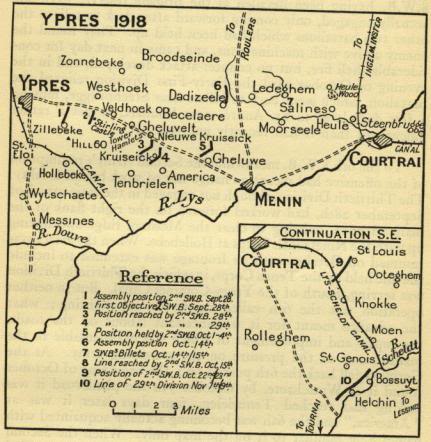
After a successful advance from Zillebeke to Geluvelt, the 2nd Battalion South Wales Borderers had enjoyed a short period of rest, but this came to an end on 11th October when they returned to the line north of Gheluwe. They had two reasonably quite night here before being relieved by the 2nd Battalion, Royal Fusiliers, and they were then moved to old trenches north of Dadizeele.
One advantage that the troop had of advancing over this land was that the countryside was relatively unscathed by fighting, and when billeted they generally had a roof over their heads. However, there were also large numbers of civilians to contend with, along with the incessant German artillery.
After breakfast at 5 a.m. on the 15th October, the battalion moved up to their assembly positions. At 9 a.m. the barrage started and they advanced, their objective being the capture of the village of Salines. As they approached, however, they came under intense German machine gun fire from the left flank. 'D' company peeled off to deal with this, attacking the wood which housed the German troops. Captain Dendy was killed in the assault, in which the machine gun posts were captured, their defenders being disposed of in a hand-to-hand struggle.
The remaining troops continued the advance, and despite some strong German resistance, all opposition was soon broken down. The final objective, the Courtrai-Ingleminster railway was reached before midday. Several casualties had been inflicted when the troops had advanced into the British barrage, and also the enemy shell fire and machine gun resistance had inflicted some fatalities amongst the attacking troops.
Pte. Parkin was killed at some point in the attack and was initially buried close to where he fell at Salines. There were 43 men killed and buried where they fell and after the war they were moved to the cemetery at Dadizeele.
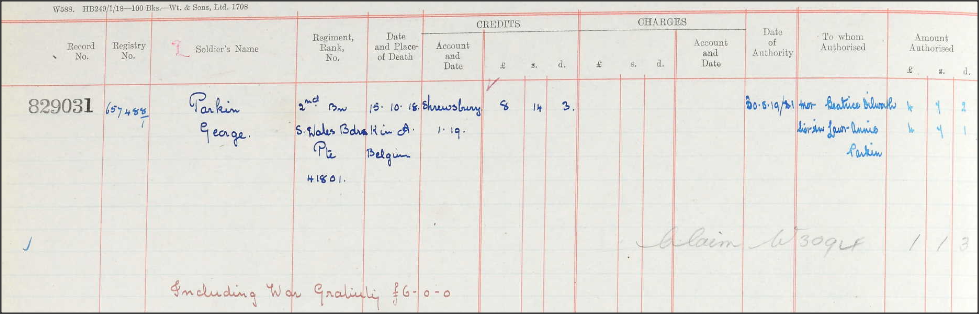
Pte Parkin's entry in the Register of Soldiers Effects lists his mother, Beatrice Dilworth, and sister in law Annie Parkin as next of kin
A map of the Ypres area around the time of the SWB attack
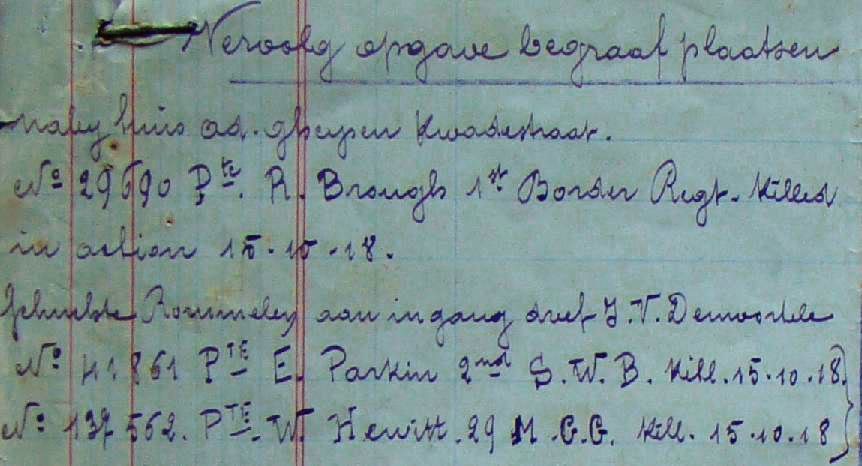
The above is an extract from a Belgian document listing the initial burial locations of soldiers who fell in the attack.
For Private Parkin, it states, "'gehuchte Rommelen aan ingang dreef J.V.demoortele' which translates as
"in the hamlet of Rommelen, at the entrance of the drive way of Jean Vandemoortele".
The document has been kindly provided by a Belgian researcher, Bart Seynaeve, a member of the local history association "De Meiboom".
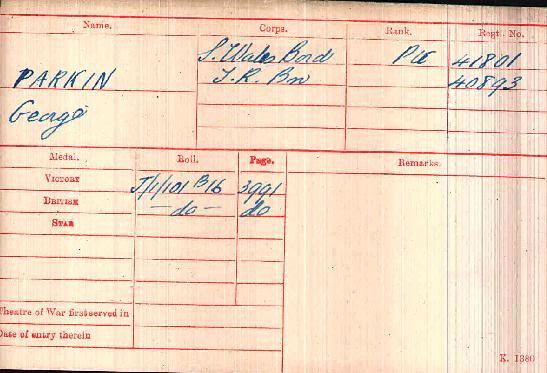
Pte Parkin's entry in the Medal Rolls
George Parkin's Medal Index Card shows that he served with the Training Battalion of the regiment before transferring to the 2nd Battalion. The absence of a date arrived in theatre confirms that he only went overseas after January 1916.
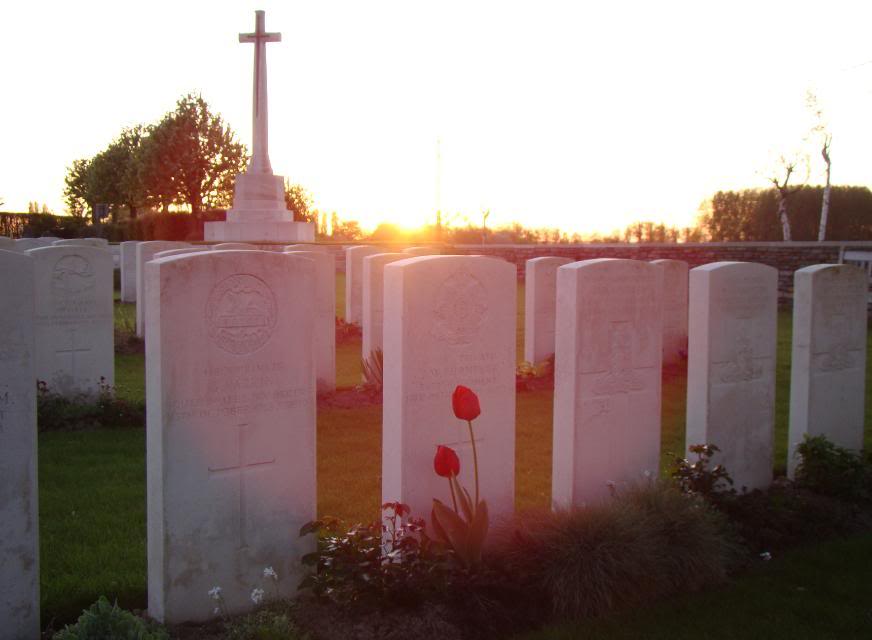
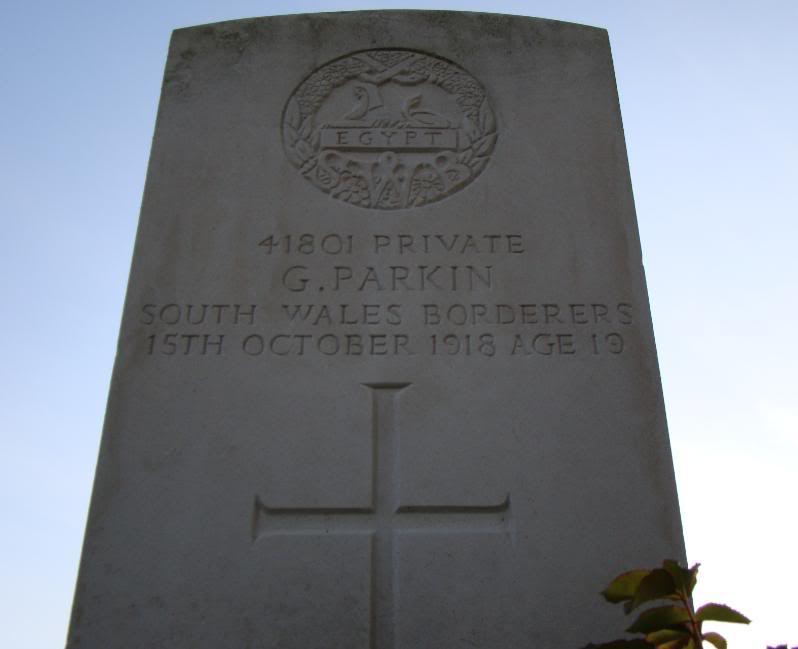
Images of George Parkin's headstone at Dadizeele, provided by "Bart". George's headstone is on the left of the above picture
Member Comments(0)
Please select a letter for a surname list:
|